Farnam Fly Trap Attractant Refill 8x30g
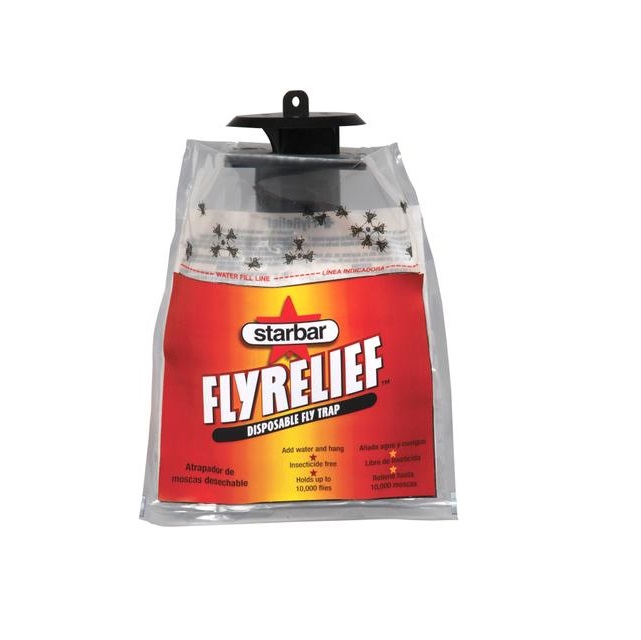
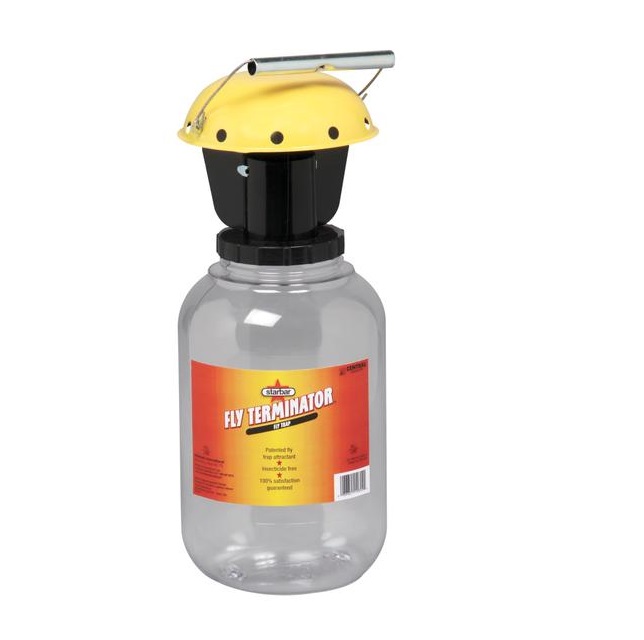
Reusable insecticide-free fly trap.
57102
41535013530
24 months
130g
Suitable for trapping insects: housefly (Musca domestica), house louse (Fannia canicularis) and similar sucking species that most commonly scrape and suck food. * Not intended for stinging or biting insects (ants, crickets, dragonflies, grasshoppers, etc.) * Recommended for use in confined areas. * Never use as a preventative measure; it may actually attract flies. In areas where the insect population is low, the trap may not work to its full potential, as dead flies in the trap act as bait for others. Do not wash the inside of the trap when reusing it. The longer you use the trap, the more effective it becomes (dead insect bodies attract more insects). * An effective, insecticide-free insect trap that attracts and kills thousands of flies. * Contains a patented attractant that insects cannot resist. * Excellent for use near horses, pets, cattle, sheep, poultry, pigs, outdoor dog kennels, in the garden and in rubbish bins, or anywhere insects are a problem. Safe for use around children and pets. * Durable, shatterproof bottle that will last the whole season. Instructions for use 1. No meat or fish is required as bait for the "Fly Terminator®". 2. IMPORTANT: Shake the attractant well – it settles at the bottom during storage. 3. Pour 30 ml (2 tablespoons or 1 oz) of attractant into the Fly Terminator™ jug. 4. Fill the jug 1/3 full with water. 5. Shake gently to disperse the attractant in the water. 6. Screw the top assembly onto the jug. 7. Place the trap outdoors in a sunny spot where there is a high concentration of insects, when the insects are active, or anywhere where the pungent smell of the concentrate will not be a nuisance. Note: Fly Terminator™ traps are not recommended for use in enclosed spaces or against biting insects (ants, crickets, dragonflies, grasshoppers, etc.). Do not place the trap within reach of farm animals. If strong winds are a problem, the trap can be hung by the hole in the handle (a piece of binding wire will do the job very well). Please note, however, that for maximum effectiveness, the trap must be placed 4 feet (120 cm) above the ground. In hot weather (above 85°F/30°C), the trap works better in the shade. In cooler weather, place the trap in a sunny spot. MAINTENANCE: 1. The contents of the trap should be shaken at least twice a week to ensure the trapped insects are fully submerged. 2. Add water as needed to maintain the correct level marked on the jug or 1 inch (1.27 cm) below the level of the trapped insects. Do not allow the trap to dry out. 3. Without sufficient shaking, insect larvae (maggots) may appear on the surface of the dried-out trapped insects. In this case, add 1 teaspoon of liquid washing-up liquid and enough water to completely cover all the insects (about 1 to 2/3 of the contents), shake, leave to stand for 24 hours and reduce the water level in the trap back to the recommended level. 4. When the trap jug is 2/3 full of dead insects, empty and clean the trap and refill with attractant. USEFUL TIPS: 1. In areas with low insect activity, the attractant may dissipate without catching a sufficient number of insects. If fewer than approximately 50 insects are caught within 5 days, we recommend adding attractant to prolong the trap’s lifespan and effectiveness. 2. Occasionally, spiders may settle in the trap, which significantly reduces its effectiveness. If this happens, unscrew the top of the trap and remove the spiders and webs using a twig. 3. Use several traps in different areas. A good insect control programme should complement good manure management practices. 4. If light frost is common where the trap is installed, it will catch more insects if placed 2–3 feet (60–90 cm) above the ground. Hanging the trap above head height will reduce the number of insects caught. 5. If insect larvae (maggots) become a problem and liquid washing-up liquid fails to remove them, pour 3 tablespoons of vegetable oil into the trap, shake it and leave it to stand overnight. Then empty and clean the trap and refill it with attractant. 6. Dead insects make excellent natural fertiliser. Bury the contents of the trap at least 15 cm deep. 7. Never seal dead insects inside a closed container. This could lead to an accidental explosion. 8. In areas with hard water, it is recommended to use distilled or purified water to increase the trap’s effectiveness.